


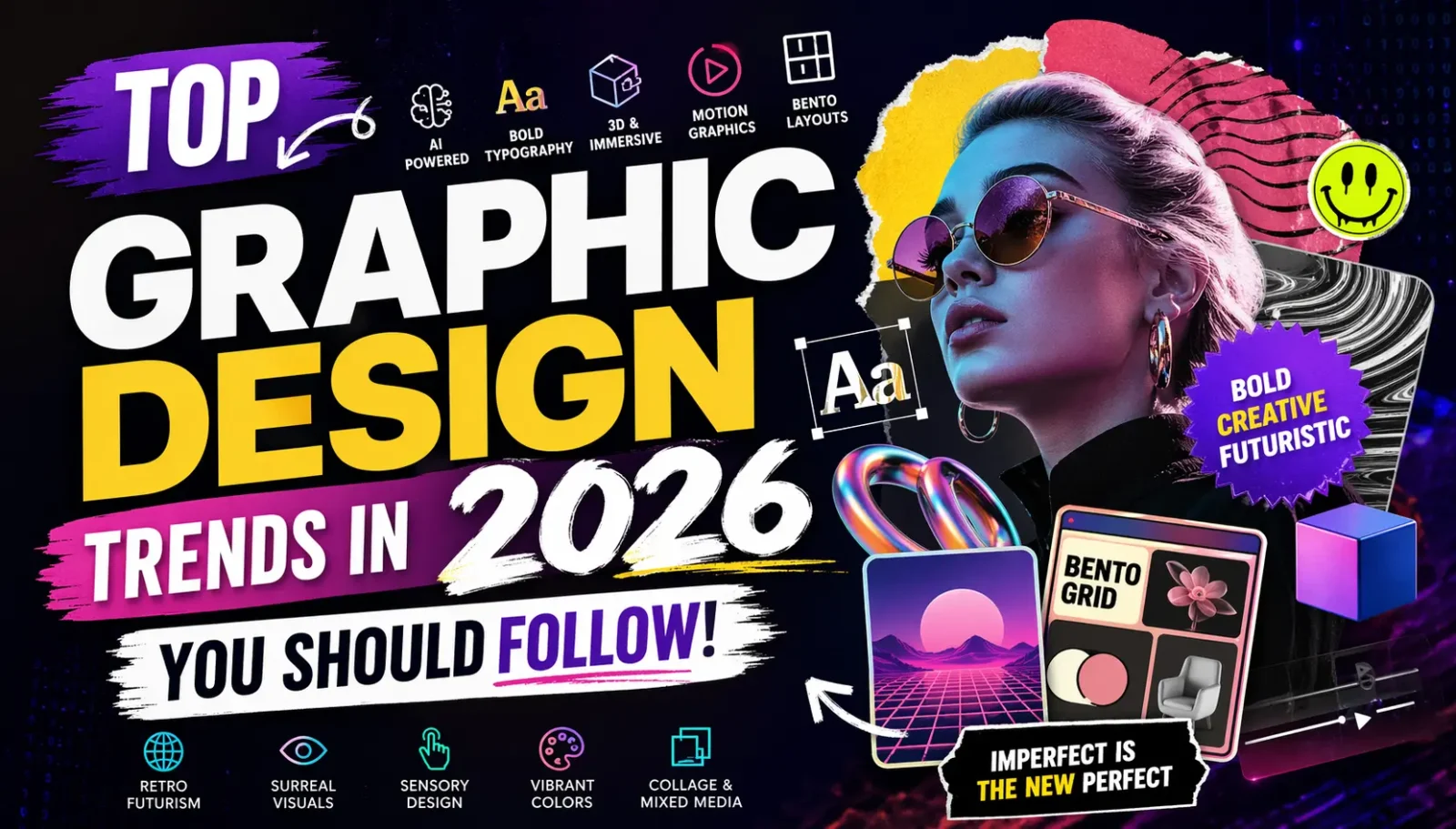
Graphic design in 2026 is not just about aesthetics—it’s about experience, emotion, and innovation. The design industry is evolving rapidly, driven by artificial intelligence, cultural shifts, and digital transformation. What worked in 2023 or 2024 might already feel outdated today.
In 2026, we’re seeing a fascinating blend of human creativity and AI assistance, along with a strong return to authenticity, imperfections, and bold storytelling. Designers are no longer just creators—they are strategists, storytellers, and experience builders.
According to industry insights, modern design is balancing AI precision with human originality, while embracing expressive visuals over perfection.
If you’re a designer, freelancer, or creative entrepreneur, understanding these trends is crucial to staying competitive.
Why Graphic Design Trends Matter
Before diving into the trends, let’s understand why they matter:
- They help you stay relevant in the industry
- Improve your client appeal and portfolio
- Enable you to create modern, engaging designs
- Give you a competitive edge in freelancing or jobs
Ignoring trends doesn’t make you unique—it often makes your work outdated.
Top Graphic Design Trends in 2026
1. AI-Powered Design (But With Human Control)
AI is no longer just a tool—it’s a creative partner.
In 2026, designers use AI for:
- Concept generation
- Layout ideas
- Color palette suggestions
- Image generation
But here’s the twist: AI alone is not enough.
Designers now focus on:
- Adding human emotion
- Refining AI outputs
- Avoiding “generic AI look”
AI-generated design is most effective when combined with human creativity, acting as a collaborator rather than a replacement.
Key Takeaway
👉 Use AI to speed up work—but rely on your creativity to make designs unique.
2. Imperfect & Humanized Design
Perfection is out. Imperfection is trending.
Designers are embracing:
- Hand-drawn elements
- Rough textures
- Asymmetry
- Organic shapes
This shift reflects a growing desire for authenticity and emotional connection.
“Imperfect design” is becoming a major theme as audiences seek more real and relatable visuals.
Example Use Cases
- Branding
- Packaging design
- Social media creatives
Key Takeaway
👉 Add small imperfections to make your designs feel human.
3. Bold & Experimental Typography
Typography in 2026 is loud, expressive, and experimental.
Trends include:
- Oversized fonts
- Distorted text
- Liquid typography
- Handwritten styles
Designers are using typography as the main visual element, not just supporting text.
Playful and exaggerated lettering styles are gaining popularity, replacing traditional uniform fonts.
Key Takeaway
👉 Typography is no longer secondary—it’s the hero of your design.
4. 3D Design & Immersive Visuals
3D design is becoming mainstream across:
- Websites
- Apps
- Branding
- Advertising
Instead of flashy effects, 3D is now:
- Subtle
- Integrated
- Functional
It adds depth, realism, and engagement to designs.
Examples
- Product mockups
- UI elements
- Animated graphics
Key Takeaway
👉 Learn basic 3D tools—it’s no longer optional.
5. Maximalism & Chaos Design
Minimalism dominated for years—but now:
👉 Maximalism is back.
This includes:
- Bright colors
- Layered elements
- Busy compositions
- Visual overload (but intentional)
Designers are creating bold, attention-grabbing visuals that stand out in crowded digital spaces.
But Be Careful
Bad maximalism = clutter
Good maximalism = controlled chaos
Key Takeaway
👉 Be bold—but maintain visual hierarchy.
6. Motion Graphics & Animated Branding
Static design is fading.
In 2026:
- Logos move
- Text animates
- UI elements respond
Motion is now a core part of brand identity, not an add-on.
Where It’s Used
- Social media
- Websites
- Ads
- Apps
Key Takeaway
👉 Learn animation basics to stay competitive.
7. Retro + Futuristic Fusion
Designers are combining:
- 90s nostalgia
- Y2K aesthetics
- Futuristic elements
This creates a unique blend of:
👉 Past + Future = Trendy Visuals
Rough textures and nostalgic styles are returning as audiences crave familiarity with a modern twist.
Key Takeaway
👉 Mix old-school vibes with modern design tools.
8. Surreal & Abstract Visuals
Reality is boring. Designers are breaking it.
2026 visuals include:
- Dream-like compositions
- Floating objects
- Unexpected combinations
Surreal imagery is used to:
- Grab attention
- Tell stories
- Create emotional impact
Designs are becoming more imaginative and expressive with surreal elements.
Key Takeaway
👉 Think beyond reality—creativity has no limits.
9. Bento Grid Layouts
Inspired by Japanese lunch boxes, these layouts are:
- Clean
- Structured
- Modular
Perfect for:
- Websites
- Dashboards
- Apps
They offer clarity with flexibility, making content easy to consume.
Key Takeaway
👉 Use grids creatively for modern UI design.
10. Sensory & Tactile Design
Design is no longer just visual—it’s sensory.
Designers are adding:
- Texture-like visuals
- Realistic materials
- Interactive feedback
The goal is to simulate touch, movement, and feel digitally.
Key Takeaway
👉 Make your designs feel alive, not flat.
11. Cultural & Local Design Influence
Globalization is shifting toward local storytelling.
Designers are incorporating:
- Cultural patterns
- Regional typography
- Local color palettes
This creates:
👉 Authentic and relatable designs
Key Takeaway
👉 Use cultural identity to stand out globally.
12. Collage & Mixed Media
Collage design is booming again.
Features include:
- Cut-and-paste visuals
- Mixed textures
- Layered compositions
It creates a raw, artistic feel that stands out from polished designs.
Key Takeaway
👉 Combine different elements for creative storytelling.
13. Hyper-Personalization in Design
Design is becoming more user-specific.
Examples:
- Personalized ads
- Custom UI experiences
- AI-driven visuals
This trend focuses on:
👉 “Design for YOU, not for everyone”
Key Takeaway
👉 Learn personalization tools and strategies.
14. Anti-Trends: What’s Going Out in 2026
Not everything is trending. Some styles are fading:
- Overused gradients
- Generic AI designs
- Lazy minimalism
- Template-based design
Designers are rejecting work that feels:
👉 Repetitive and soulless
Key Takeaway
👉 Avoid trends that lack originality.
How to Use These Trends in Your Work
Here’s how you can apply these trends:
1. Don’t Follow Everything
Pick trends that fit your style.
2. Combine Trends
Example:
- AI + Imperfect design
- 3D + Motion
3. Focus on Purpose
Trends should enhance communication, not distract.
4. Experiment Daily
Practice new styles regularly.
Tools to Master Graphic Design Trends
To stay ahead, learn tools like:
- Adobe Illustrator
- Photoshop
- CorelDRAW
- Blender (for 3D)
- After Effects (for motion)
- Figma (for UI/UX)
Future of Graphic Design Beyond 2026
Looking ahead:
- AI will become more advanced
- AR/VR design will grow
- Real-time design tools will dominate
- Personalization will increase
But one thing remains constant:
👉 Creativity will always be human-driven
Conclusion
Graphic design in 2026 is bold, expressive, and deeply human.
The biggest shift is not just in visuals—but in mindset:
- From perfection → authenticity
- From static → interactive
- From generic → personal
To succeed, designers must:
- Adapt quickly
- Learn continuously
- Experiment fearlessly
Remember:
👉 Trends will change—but great design principles never do.
Bonus: Quick Summary of 2026 Trends
- AI + Human creativity
- Imperfect design
- Bold typography
- 3D visuals
- Maximalism
- Motion graphics
- Retro-futuristic styles
- Surreal visuals
- Bento grids
- Sensory design
- Cultural influence
- Collage design
- Personalization